

In 2008, I sat in my Microsoft office as the financial crisis hit. Companies around the high-tech industry slashed jobs in a panic, but Steve Ballmer charted a different course. Yes, we stuck to a tough but fair talent management system – borrowed from GE, ranking employees 20-70-10, with the bottom 10% phased out of the business yearly – and made cuts where needed to address market realities. But Ballmer also doubled down on cloud computing, a bet fueled by data, advisors, and instinct. It wasn’t instant magic, but it paid off big (check Microsoft’s stock since). Back then, we relied on twice-yearly, weeklong reviews – crunching numbers, tweaking tactics, and setting strategy. Now, AI does that in hours, with sharper precision, turning year-long debates into real-time decisions. Speed’s only half the game, though – you still need top talent to make it work (something the current Administration may be missing).
The Department of Government Efficiency (DOGE) could take notes. Its blunt downsizing push risks repeating old mistakes unless it prioritizes performance over tenure and guards its best people. Microsoft – and plenty of tech giants – juggles this daily: layoffs happen when markets shift, but the focus stays on keeping A-players to remain competitive and profitable. So, is DOGE stuck in a tired debate – long-term vision versus short-term fixes? In 2025, AI offers a third way: predictive strategy. It’s not about guessing decades ahead or scrambling for quick wins – it’s about shaping the future as it unfolds. Are we clinging to yesterday’s playbook when tomorrow’s tools are here?
For years, strategy has ping-ponged between two poles. Foresight – think Porter’s Five Forces or Barney’s Resource-Based View – builds resilience by leveraging strengths and scanning horizons. Microsoft’s 2008 cloud pivot nailed this, outlasting rivals who just cut. Then there’s immediacy: bold, gut-driven moves like mass layoffs or rushed expansions, often chasing quarterly applause or political points. It’s tempting but shallow—fixing symptoms, not causes. Who approved the bloated budgets anyway? Mintzberg’s Rise and Fall of Strategic Planning nailed it: rigid plans flop in crises, and knee-jerk reactions miss the big picture. McKinsey’s 2022 data backs this—strategic workforce planning lifts profits by 25%. Both approaches limp alone. AI changes that.
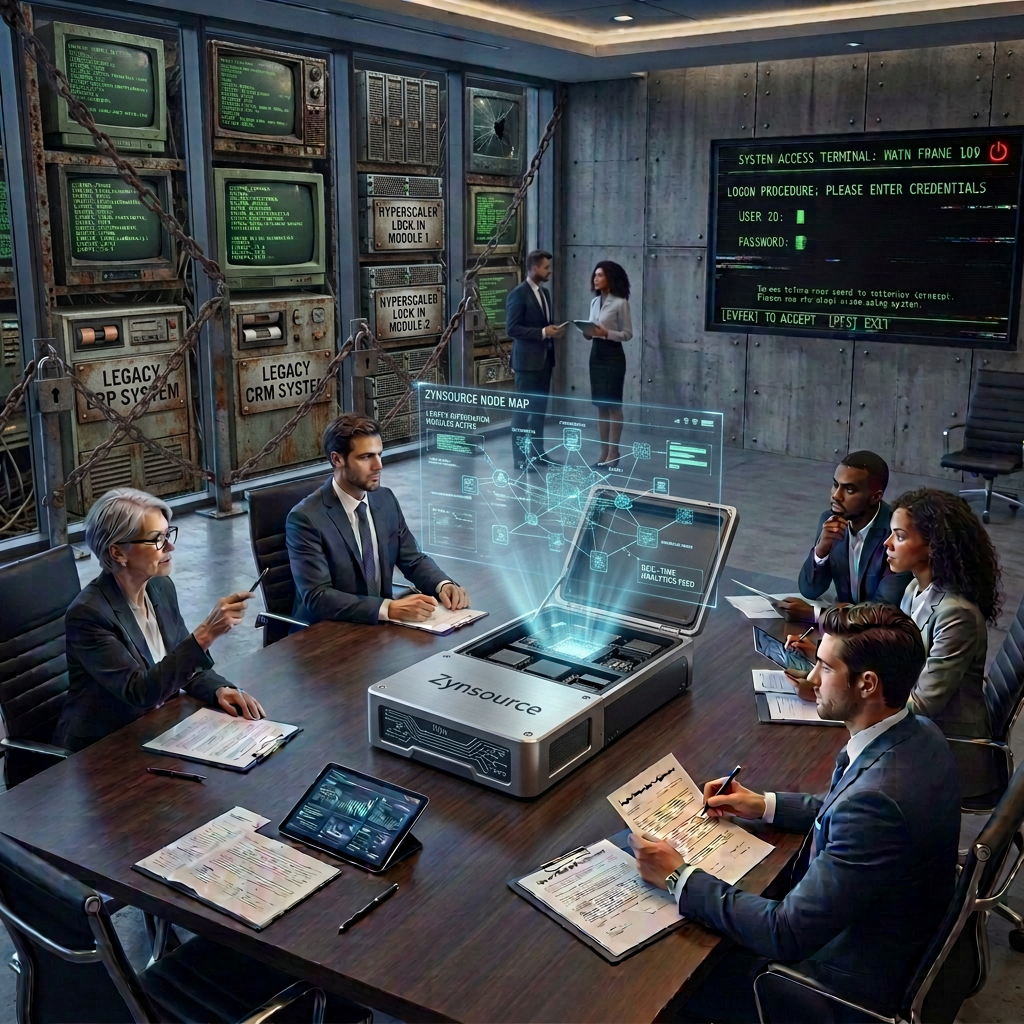
Enter 2025’s predictive revolution. Picture 2008 with today’s tech: AI could’ve modeled cloud growth, supply risks, and layoff ripple effects in days – not months. McKinsey’s 2024 stats show predictive analytics driving 30% higher revenue growth. Look at Amazon in 2023 – AI nailed demand spikes, cutting warehouse costs by 15%. Or Tesla last quarter, dodging a chip crunch with AI simulations while rivals stalled. This isn’t sci-fi – it’s now. Predictive strategy fuses foresight’s depth with immediacy’s speed, using real-time data and machine learning to spot trends, act fast, and stay ethical (OECD says AI ethics boosts trust 40%, 2024). The catch? Leaders must ditch hunches, incomplete data and shock and awe for full-picture insights – a challenge for DOGE’s axe-wielders. Strategy becomes alive, not static.
Reflecting on 2008, Microsoft showed guts and smarts. The cloud call was gold, but AI might’ve flagged flops like aQuantive or Nokia—deals that bled billions. We’ll never know, though the $10B OpenAI stake suggests they’re learning fast. The government could cut smarter, too – predicting risks to critical areas like nuclear safety or health research, not just swinging blindly. Foresight wins long games; immediacy feels decisive but falters. AI bridges them with precision.
In Part 2, we’ll dig into Trump’s gut-driven stumbles, Microsoft’s data-fueled highs, and 2025’s AI trailblazers like X Corp. Timing’s everything – predictive tools let us own it. So, is your organization guessing, reacting, or predicting? That’s the decade-defining question.
References
Amazon. (2023). *Sustainability Report: Investing in Human Capital*. Seattle, WA: Amazon Corporate Publishing.
Barney, J. B. (1991). *Firm Resources and Sustained Competitive Advantage*. Journal of Management, 17(1), 99-120.
Byrne, J. A. (2019). *Jack: Straight from the Gut* (2nd ed.). Warner Business Books.
Deloitte. (2023). *Global Human Capital Trends: The Rise of the Social Enterprise*. Deloitte Insights Quarterly Report.
Gerstner, L. V. (2022). *Who Says Elephants Can’t Dance?: Leading a Great Enterprise through Dramatic Change* (Anniversary ed.). HarperCollins Publishers.
Harvard Business Review. (2023). *The dangers of aggressive cost-cutting: Lessons from corporate downsizing*. Harvard Business Review, 101(2), 98-106.
James, E. H., & Wooten, L. P. (2010). *Crisis Management in a Complex World*. Oxford University Press.
McKinsey & Company. (2022). *Navigating workforce transitions: How rightsizing boosts profitability*. McKinsey Global Institute Report.
Microsoft. (2022). *Annual Report FY2022*. Redmond, WA: Microsoft Corporation.
Mintzberg, H. (1994). *The Rise and Fall of Strategic Planning*. Free Press.
MIT Sloan Management Review. (2023). *Leading Organizational Change in the Digital Age*. MIT Sloan Management Review, 64(3), 25-35.
Mollan, S. M., & Geesin, B. (2019). *Donald Trump and Trumpism: Leadership, ideology and narrative of the business executive turned politician*. Organization, 27(4), 405-418.
O’Brien, T. L. (2023). *TrumpNation: The Art of Being Donald* (Updated ed.). Warner Books.
OECD. (2022). *Employment protection legislation and labor market reforms in Europe*. OECD Economic Outlook, 2022(1).
Porter, M. E. (1979). *How Competitive Forces Shape Strategy*. Harvard Business Review, March-April, 137-145.
PwC. (2023). *Global Workforce Planning Study: Building Resilient Organizations*. PwC Global.
Wall Street Journal. (2023). *Analysis: The Business Record of Donald Trump*. Wall Street Journal Business Analysis Series.
Note: The references above are use in Part one and two of this series.



Leave a Reply