

I received an email inquiring how DOGE is doing their audit from a technical POV. While I’m not involved with the Department of Government Efficiency’s (DOGE) auditing project, I can offer an “educated guesses” on how they’re implementing this technologically. Given that one of the key players is from Databricks, it’s likely they are following a similar approach to how large-scale data audits are conducted in enterprise settings.
So, how exactly is DOGE auditing these government transactions and operations from a technology standpoint?
If the Data Is in the Cloud (Azure, AWS, or Google Cloud)
If the data resides in a cloud environment, they are likely leveraging modern data lake architectures and scalable compute resources to conduct audits. Here’s what this might look like:
Data Lakehouse Architecture – A unified storage system (e.g., Databricks Lakehouse, AWS Lake Formation, Google BigQuery, or Azure Synapse) where structured and unstructured data is ingested and processed. This would allow DOGE to integrate data from multiple sources.
- AI & Machine Learning Models for Anomaly Detection – Utilizing MLflow (open-source MLOps) or cloud-native AI tools to detect fraudulent activities, misallocations, and inefficiencies in real-time.
- Data Streaming & Event Processing – Technologies like Apache Kafka or AWS Kinesis for real-time auditing, flagging irregular transactions as they happen instead of waiting for periodic reviews. Likely not happening in the initial shock and awe campaign.
- Role-Based Access & Data Governance – Using Unity Catalog (Databricks), AWS IAM, or Google’s Data Catalog to ensure sensitive data is only accessible by authorized personnel. It doesn’t look this this step is being taken but once again, I don’t know.
If the Systems Are On-Premise
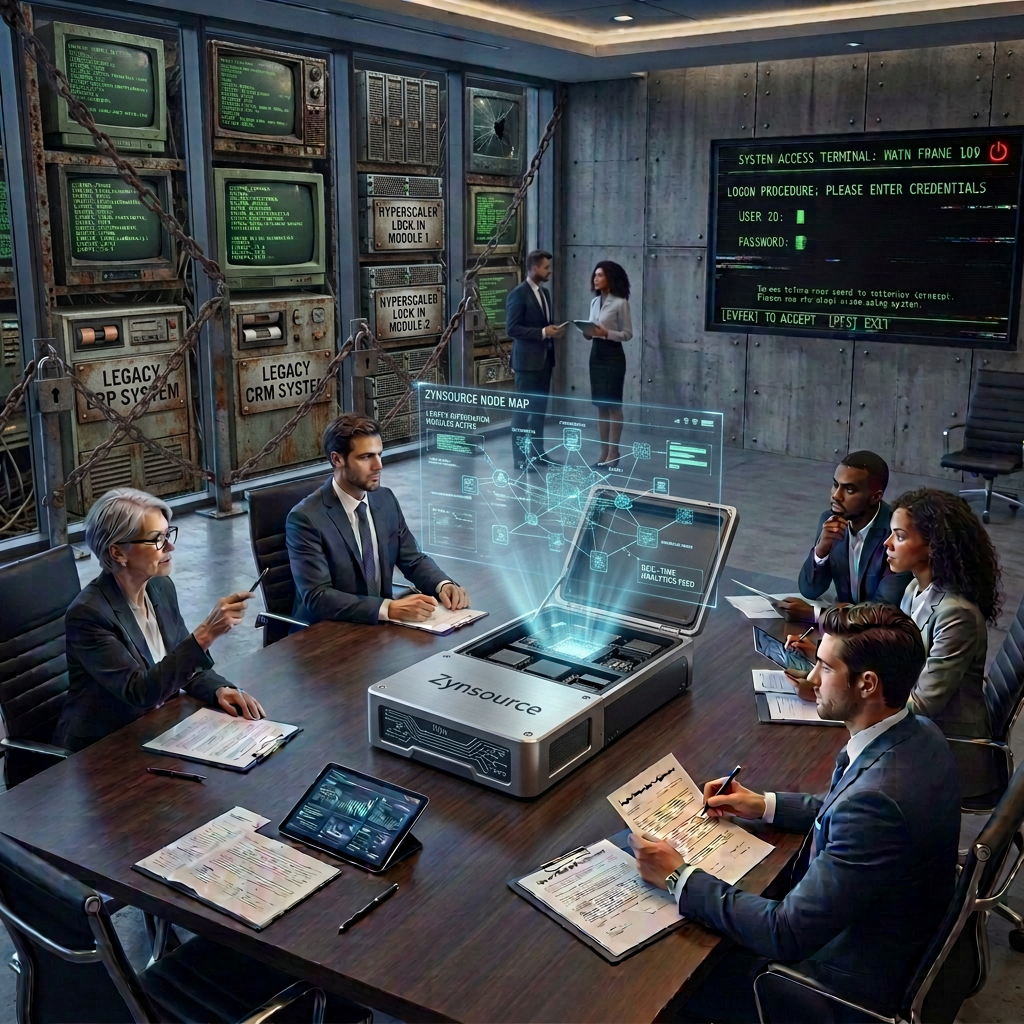
For agencies still relying on legacy, on-premise systems, the approach is different—likely a hybrid model incorporating both traditional and modern methodologies:
- ETL Pipelines & Data Warehousing – Extracting data from legacy databases (e.g., Oracle, SQL Server, IBM Db2) and moving it into a centralized data warehouse for analysis. They might be using tools like Apache NiFi, Talend, or Informatica for structured extraction and transformation.
- Log-Based Auditing & Forensics – Capturing system logs and transaction records from government IT systems, likely using Splunk, ELK (Elasticsearch, Logstash, Kibana), or a homegrown system to monitor anomalies.
- Batch Processing for Large Datasets – Since real-time analytics is harder to achieve on-prem, they are probably running Spark on Hadoop clusters or using high-performance computing (HPC) clusters for overnight batch processing.
- Hybrid Integration with Cloud – Even if on-premise systems dominate, it’s possible they are adopting a hybrid cloud model where legacy data is periodically synchronized with a secure cloud storage layer for enhanced AI-driven analytics.
If DOGE wants to go beyond traditional data analytics and enhance GPT capabilities, they may be using Retrieval-Augmented Generation (RAG) models to dynamically pull relevant data into their AI-driven audit engine. This would allow them to generate richer, context-aware insights by combining:
- Document Retrieval from Government Archives – Pulling from Congressional records, budget appropriations, legislative texts, historical audit reports, and agency policy documents stored in Azure Cognitive Search, AWS OpenSearch, Google Vertex AI, or a custom vector database like FAISS or Pinecone.
- Data Fusion for Contextual AI Responses – Instead of just processing financial transactions, RAG models could pull relevant legislative history, procurement policies, and regulatory precedents into the audit engine, ensuring AI-generated insights align with government intent.
- Embedding-Based Search & Vectorized Data – Using OpenAI embeddings, Cohere, or Hugging Face models to structure and search through millions of records across government databases to find relevant precedents for each audit case.
- Chained Queries for Explainable AI Audits – Instead of a static report, a GPT-powered RAG model could generate human-readable audit justifications by tracing why a transaction was flagged—backed by historical records, legal statutes, and prior audit cases.
- Multi-Modal Data Synthesis – Beyond text, they could be incorporating geospatial data (satellite imagery of funded projects), audio transcripts (congressional hearings), and even scanned PDFs (OCR for old reports) into their AI engine.
How This Might Work in Different Environments:
Cloud-Based RAG Models (Azure, AWS, Google Cloud)
If DOGE’s audit engine is running in the cloud, it could use:
- LangChain or LlamaIndex – To ingest and query government audit data with RAG-powered prompts.
- Vector Search (Pinecone, Weaviate, or FAISS) – To enable efficient document retrieval at scale.
- GPT-based Agents (OpenAI, Claude, or Gemini) – To dynamically summarize and reason through audit findings.
On-Premise RAG (For Air-Gapped Government Networks)
For agencies using on-premise systems with classified or sensitive data:
- Self-hosted LLMs (Llama 3, Mistral, Falcon) – Running in a secure HPC cluster.
- Local Vector DBs (FAISS, Milvus, or Redis Search) – For high-performance document retrieval without internet connectivity.
- Offline NLP Pipelines (spaCy + Transformer models) – To process legislative text without relying on external APIs.
The Real-World Impact
If DOGE isn’t already leveraging RAG, it’s one of the biggest missing pieces. With a properly configured GPT-powered retrieval system, their auditing process could:
- Justify anomalies with sourced legislative text rather than just flagging numbers.
- Create an explainable, human-readable reasoning chain for each audit decision.
- Bridge gaps between modern AI analytics and legacy document storage, ensuring the system learns from decades of institutional knowledge.
Key Takeaways
- If DOGE’s data is in the cloud, they are likely utilizing modern AI-driven analytics with scalable storage and governance.
- If the systems are on-premise, batch processing, ETL pipelines, and log-based audits are the primary methods of data analysis.
- A hybrid approach is probable, where on-premise legacy data is integrated into cloud-based AI models for deeper insights.
Regardless of the infrastructure, the real challenge isn’t just finding anomalies but understanding root causes—which is where human intelligence, policy expertise, and legislative context must play a role. Remember this is just an educated based on how I would approach the problem.
Would love to hear thoughts from those working directly on this! How close is this to what’s actually happening?



Leave a Reply