

In this final part, we’ll explore ways to combat gaslighting and the potential of an AI tool.
Fighting Back: Practical Strategies
Awareness is a solid foundation. Consider these approaches:
- Identify the Pattern
Notice signs like denial or blame-shifting, as Stern (2007) advises. Say, “I see it differently.” Mark, 25, recorded a roommate’s promise, settling a dispute. - Verify with Data
Check primary sources like news archives or records (Medical News Today, 2023). Lisa, 40, used facts to see past media spin. - Document Evidence
Keep texts or screenshots as proof (Forbes Health, 2023). Priya, 29, showed HR emails, winning her case. - Limit Exposure
Cap time on skewed media to 15 minutes daily, trying balanced sources like The Daily (NYT) (Psychology Today, 2019). Tom, 35, felt clearer after this shift. - Seek Support
Talk to friends or consider therapy—r/gaslighting or a $50 session helps (Newport Institute, 2023). Aisha, 27, gained confidence from a group.
Real-Life Example: Educational Setting
In 2023, a student in London, Ahmed, 16, was told by a teacher, “You didn’t submit that essay,” despite proof. Documenting his work resolved the issue.
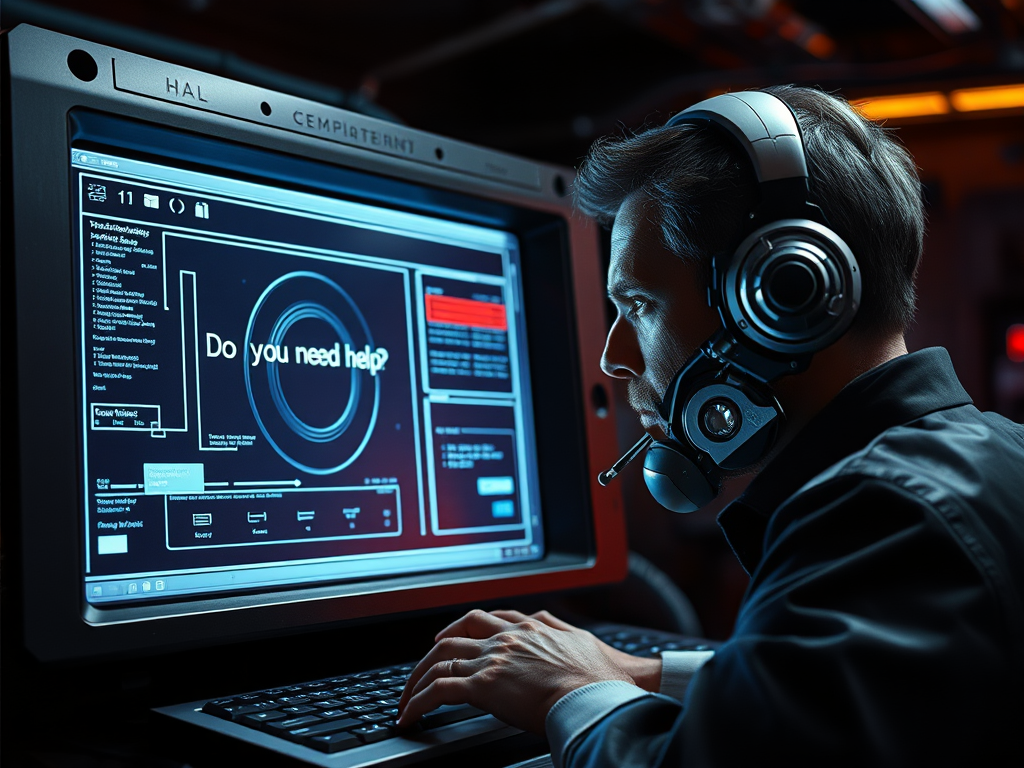
TruthGuard: A Concept to Develop
TruthGuard is an idea for an AI tool to help spot gaslighting, building on current tech.
- How It Could Work: It might use text analysis tools, trained on social media posts and psychological patterns, aiming for 80% accuracy after six months of testing (MIT Technology Review, 2022). This is an early concept, needing refinement.
- Potential Partners: Groups like Snopes and AllSides could share insights (AllSides, 2023).
- Considerations: Training data might miss nuances like humor, leading to a 20% error rate, requiring human checks (Scientific American, 2022). Further study is needed.
Take the Gaslighting Awareness Quiz
Test your insight: Answer yes/no to these questions (score 1 point per “yes”):
- Have you doubted your memory after a conversation?
- Do you feel pressured to agree with someone’s version of events?
- Have you noticed repeated denials from a source you trust?
- 0-1: You may be less affected—stay vigilant.
- 2-3: Consider reflecting on your interactions—support can help.
Recommended Resources
- Reading: Entman, R. M. (2003). Framing bias. Journal of Communication.
- Podcast: The Gaslighting Recovery by Psych Central (2023), Apple Podcasts.
- Video: “Spotting Manipulation” by Big Think (2022), YouTube.
Join the Conversation
Share your quiz results or experiences in the comments below—how do you navigate misinformation? Your input can guide future discussions.
References
AllSides. (2023). Media bias ratings. Retrieved from http://www.allsides.comAmerican Psychological Association. (2012). Gaslighting. In APA dictionary of psychology (p. 413). Washington, DC: Author.
Entman, R. M. (2003). Framing bias: Media in the distribution of power. Journal of Communication, 57(3), 51-58. doi:10.1111/j.1460-2466.2003.tb02583.x
Forbes. (2024). 2024 was another tough year for cable television industry. Retrieved from http://www.forbes.com/sites/technology/2024/01/15/cable-television-industry-2024
Forbes Health. (2023). Gaslighting: Definition, examples and support. Retrieved from http://www.forbes.com/health/mind/gaslighting-definition
Journal of Social Issues. (2022). Intersectional gaslighting in workplaces. Journal of Social Issues, 78(4), 789-810. doi:10.1111/josi.12512
Medical News Today. (2023). What is gaslighting? Retrieved from http://www.medicalnewstoday.com/articles/gaslighting
MIT Technology Review. (2022). AI and language manipulation detection. Retrieved from http://www.technologyreview.com/2022/06/10/1054321/ai-language-manipulation
National Domestic Violence Hotline. (2020). Domestic violence statistics. Retrieved from http://www.thehotline.org/resources/statistics
Newport Institute. (2023). What is gaslighting? Retrieved from http://www.newportinstitute.com/resources/mental-health/gaslighting
Pew Research Center. (2022). Social media and misinformation. Retrieved from http://www.pewresearch.org/internet/2022/03/15/social-media-misinformation
Psychology Today. (2019). The media psychology of gaslighting. Retrieved from http://www.psychologytoday.com/us/blog/talking-apes/201907/media-psychology-gaslighting
Psychology Today. (2023). Gaslighting’s lasting echoes. Retrieved from http://www.psychologytoday.com/us/blog/the-empaths-empowerment/2023/01/gaslightings-lasting-echoes
Scientific American. (2022). The ethics of AI in behavioral analysis. Retrieved from http://www.scientificamerican.com/article/ethics-ai-behavioral-analysis-2022
Stark, C. A. (2018). Gaslighting, misogyny, and psychological oppression. The Monist, 101(3), 255-270. doi:10.1093/monist/ony006
Stern, R. (2007). The gaslight effect: How to spot and survive the hidden manipulations other people use to control your life. New York, NY: Morgan Road Books.
Sweet, P. L. (2017). How gaslighting manipulates reality. Scientific American. Retrieved from http://www.scientificamerican.com/article/how-gaslighting-manipulates-reality
Variety. (2021). Media trends 2021: The polarization persists. Retrieved from http://variety.com/2021/tv/news/media-trends-2021-1234912345



Leave a Reply