
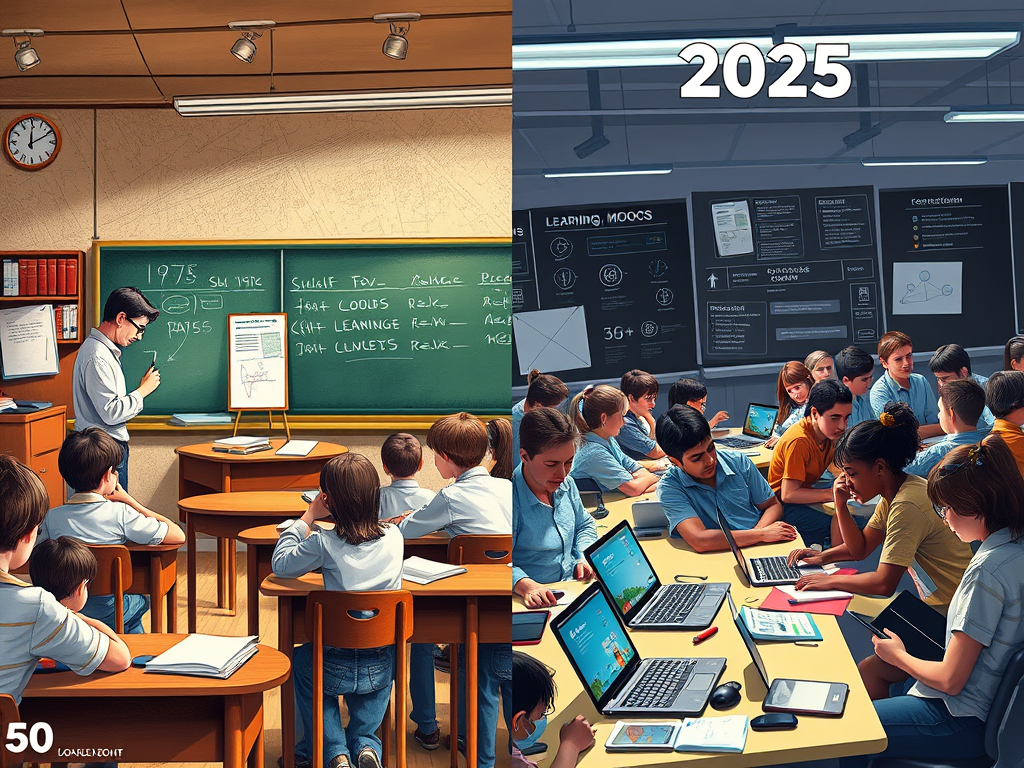
Picture 1975 – a teacher scribbles on a chalkboard, students hunch over textbooks, and knowledge feels like a rare treasure. Now, fast-forward to 2025: the web, online classes, Google, YouTube, ChatGPT, and MOOCs like edX have flipped the script. Learning’s no longer locked in classrooms – it’s everywhere, instant, and wild. Let’s unpack this seismic shift: the pros, the cons, how top schools sprint ahead while struggling ones leapfrog, and why you hold the key to what’s next.
The Web: Unleashing a Knowledge Explosion
It started with the web, cracking open a universe of info. Pros: By 2023, 5 billion people – 63% of the globe – surf online, igniting curiosity (UNESCO, 2023). Cons: But beware – misinformation lurks (Smith et al., 2021), and spotty access leaves millions out. Enter the next wave: structured learning, unbound.
Online Classes: No Walls, No Limits
Online classes took the web’s chaos and gave it shape. Pros: Flexibility rules – 70% of U.S. college kids have gone virtual by 2024 (OLC, 2024). Cons: Isolation stings, with 20% more dropouts (MIT, 2022), and tech gaps bite. Still, finding answers got faster with a little help from a search giant.
Google: Answers in a Flash
Google turned the web into a lightning-fast oracle. Pros: Research time? Slashed 60% (Stanford, 2020). Cons: Memory’s the tradeoff – why memorize when it’s a click away? (Nature, 2023). Depth takes a hit, but visuals soon stole the spotlight.
YouTube: Learning, Unplugged
YouTube made education a show worth watching. Pros: Free and fun – 85% of U.S. adults master skills here (Pew, 2024). Cons: Trouble is, 30% of “lessons” mislead (EdTech, 2022), and cat videos beckon. Then came AI, ready to chat.
ChatGPT: Your 24/7 Tutor
ChatGPT brought learning to life, one conversation at a time. Pros: Boosts results 25% with custom help (Oxford, 2025). Cons: Overuse cuts independence 15% (Oxford, 2025), and AI flubs sneak in (Wired, 2023). It’s personal – but MOOCs scaled it bigger.
MOOCs vs. Traditional: The Showdown
MOOCs (edX, Coursera) vs. old-school classrooms – what’s the score?
- Time: MOOCs flex with 6-week sprints (3-5 hours/week) for 120 million learners (Coursera, 2025); traditional locks you into 12-16 weeks (Harvard, 2023).
- Depth: MOOCs skim broad (Stanford, 2024); traditional dives 12% deeper (Harvard, 2023).
- Value: MOOCs ($0-$200) win affordability – 60% of bosses approve (LinkedIn, 2025)—while traditional ($35,000/year) keeps prestige (College Board, 2024). One school blends both like a pro.
Harvard Extension: The Gold Standard
Harvard Extension School (HES) nails the hybrid vibe. Think Ivy League cred at $2,000-$3,000 a course, mixing online ease with live debates and capstones. “Scalable brilliance,” raves a 2024 Crimson piece (The Harvard Crimson, 2024). It’s a blueprint – now let’s zoom into real-world wins.
Mississippi and Louisiana: Catching Up
In the Deep South, tech’s rewriting the story. Mississippi’s reading scores jumped 5 points since 2019, thanks to Khan Academy and virtual classrooms (NCES, 2023). Louisiana’s grad rate hit 84% in 2024, up from 78% in 2015, with MOOCs reaching rural kids (Louisiana DOE, 2024). Slow but steady – and top dogs are sprinting.
Top Schools: Full Speed Ahead
High-flyers like Massachusetts and New Jersey turbocharge these tools:
- Massachusetts: Tops NAEP math at 287 (2023), using Khan’s AI to fast-track STEM stars to MIT (NCES, 2023). HES-style hybrids juice up AP classes.
- New Jersey: With 95% broadband (2024), VR labs (Stanford, 2024) immerse kids in science, widening their lead (NJ DOE, 2024). Meanwhile, underdogs plot a comeback.
Struggling States: Leapfrogging the Pack
New Mexico and West Virginia can vault ahead:
- New Mexico: Dead last in math (268, 2023), it can use Khan’s free AI for laser-focused catch-up and YouTube for cheap skills (NCES, 2023).
- West Virginia: At 79% grads (2024), MOOCs via mobile hotspots can unlock AP for rural kids, shrinking a 30% broadband gap (WV DOE, 2024). Tech’s the great equalizer – if we wield it right.
Trends: The Next Big Thing
What’s cooking? AI hits 50% of learning by 2030 (Gartner, 2024). VR labs dazzle (Stanford, 2024). Adaptive tech sharpens focus (Oxford, 2025). Hybrids like Finland’s boost engagement 12% (Finnish Education Board, 2025). One pioneer’s already rewriting the playbook.
Khan Academy: AI with Soul
Khan Academy’s AI is magic – real-time feedback, instant curriculum updates (think new science breakthroughs), and personalized drills, all free. Teachers mentor, not babysit (Stanford HAI, 2023). It’s tech and heart in sync, begging the question: are we winning?
Better or Worse?
We’re better – literacy’s up 10% globally (World Bank, 2024) – but worse for focus (8-second spans, Microsoft, 2021) and depth. HES shows we can have it all. So, are classrooms toast?
Traditional Classrooms: Done or Evolving?
Not dead – teamwork’s 18% sharper in-person (Harvard, 2023) – but hybrids like HES rule. The future’s a mash-up, and it’s coming fast.
The Future: Tech Meets Grit
AI, VR, hybrids soar. Top states speed up, lagging ones leap – if we close the 37% offline gap (UNESCO, 2023). Khan’s AI proves tech can amplify humanity. Your move.
Call to Action: Own the Revolution
This isn’t just a story – it’s a challenge. Learners, hit HES or Khan Academy for smarts that stick. Educators, grab AI to personalize, not replace. Policymakers, wire up New Mexico and West Virginia – fund those hotspots! Employers, bet on MOOC grads. Today’s the day: take a course, gift access, mentor someone. The next 50 years? That’s on us.
Final Thoughts: From 1975 to Beyond
I personnel LOVE online educaiton and take several online classes each year and in the past 50 years, learning went from scarce to electric. HES and Khan’s AI fuse the best of both worlds. Massachusetts sprints, New Mexico leaps – we’re better armed than ever. Let’s make sure no one’s left in the dust.
References
- UNESCO. (2023). Global Internet Access Report.
- Smith et al. (2021). Journal of Educational Psychology.
- OLC. (2024). Annual Report.
- MIT. (2022). Online Education Retention Study.
- Stanford. (2020). Search Engine Efficiency Report.
- Nature. (2023). Memory and Digital Dependence.
- Pew. (2024). YouTube Learning Trends.
- EdTech. (2022). YouTube Content Analysis.
- Oxford. (2025). AI in Education Study.
- Wired. (2023). AI Hallucination Risks.
- Coursera. (2025). Learner Impact Stats.
- Harvard. (2023). In-Person vs. Online Learning.
- Stanford. (2024). MOOC Depth Analysis.
- LinkedIn. (2025). Employer Skills Survey.
- College Board. (2024). Tuition Trends.
- The Harvard Crimson. (2024). HES Online Shift.
- NCES. (2023). NAEP Scores.
- Louisiana DOE. (2024). Graduation Rates.
- NJ DOE. (2024). Broadband Access Report.
- WV DOE. (2024). Education Stats.
- World Bank. (2024). Digital Learning Impact.
- Microsoft. (2021). Attention Span Study.
- Finnish Education Board. (2025). Hybrid Learning Outcomes.
- Gartner. (2024). AI Education Forecast.
- Stanford. (2024). VR Classroom Pilot Report.
- Stanford HAI. (2023). AI+Education Summit.



Leave a Reply